Recycling and Sustainability at Furniture Disposal London
 At Furniture Disposal London we make sustainable furniture removal a measurable priority. Our approach combines clear targets, practical partnerships and borough-aware recycling practices so that every sofa, mattress or cabinet handled by our London furniture disposal teams has the best chance of being reused or recycled rather than sent to landfill. We aim to exceed standard local service levels by embedding circular-economy principles into every collection and clearance.
Our current public pledge is an 85% recycling and reuse target by 2028 for all items we process from homes and businesses across Greater London. That figure reflects both direct reuse (charity donations and resale) and material recycling (wood, metal, textiles, foam). The target is ambitious but realistic: by combining repair hubs, local transfer stations and rigorous sorting at source, our furniture removal London operations are designed to hit that mark steadily year-on-year.
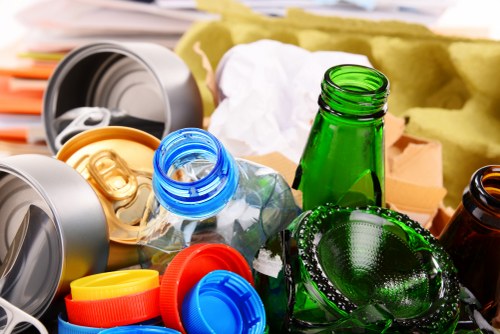 We work with boroughs that operate different waste separation schemes: many North and East London councils run separate bulky waste and sofa collection programmes, while several South and West boroughs emphasise separate food, dry recycling and textiles streams that feed into wider reuse networks. Our teams train to respect these local rules so that London furniture recycling is aligned with each borough's approach to separation and processing.
Beyond targets, the practical network that makes reuse possible depends on transfer stations and processing depots. We routinely route reusable items to local transfer stations and reprocessing hubs across London, including municipal transfer facilities in outer London boroughs and district re-use centres where items can be assessed and refurbished. These local transfer stations provide fast, low-mileage consolidation points that reduce emissions while increasing the percentage of stock that is diverted to reuse.
 Partnerships with charities are at the heart of our sustainability model. We maintain active relationships with national and local organisations such as British Heart Foundation Furniture & Electrical, Emmaus social enterprises and the London Furniture Re-use Network, alongside smaller community charities and social enterprises in boroughs from Hackney to Croydon. These partnerships enable us to channel serviceable furniture directly to charity stores, training programmes and social reuse projects.
Our charity collaborations are structured so that items get assessed, repaired and either sold to fund social programmes or handed to people in need. This reuse-first strategy reduces waste, keeps materials in circulation and supports local communities. We prioritise local outlets to keep transport distances short and to support the circular economy in the boroughs where collections originate.
Operational sustainability also demands low-carbon transport. Our fleet includes a growing number of low-emission vans—Euro 6 diesels where appropriate and an expanding set of electric cargo vans for inner-London routes—plus cargo bikes for central areas that limit vehicle access. These low-carbon vans and last-mile solutions cut emissions and improve air quality in densely populated neighbourhoods where our furniture disposal services are most active.
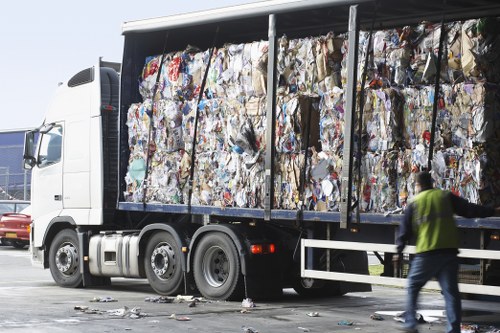 On the processing side, every item is assessed for the best end-of-life route using a strict decision framework: reuse, repair, resale, material recovery or, as a last resort, energy recovery. Our materials-sorting protocols ensure wood, metal, foam and textiles are separated and sent to the appropriate recyclers. We also prioritise local material recovery facilities to reduce haulage miles and support London-based recycling capacity.
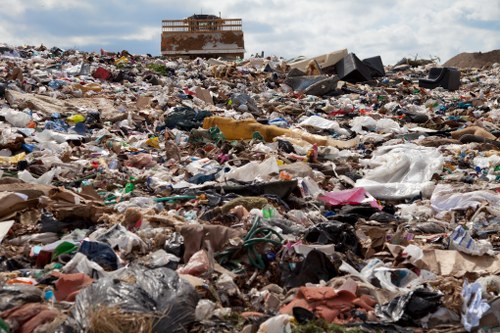 Transparency is key: clients and partner councils receive clear reporting on diversion rates, the pounds-worth of goods passed to charity and greenhouse-gas savings from our low-carbon vans. We also use data to optimise collection routes and to plan seasonal charity pickups, aligning removals with borough bulky waste calendars and reuse events. By working with local authorities and re-use networks we help improve borough-level recycling statistics and support each area's strategy for separating and reprocessing bulky items.
Practical Activities and Local Initiatives
Examples of the recycling and sustainability activities we run across London include:
- Direct charity donations of usable furniture to local stores and social projects.
- Repair and refurbishment programmes with community workshops that extend product life.
- Material separation at transfer stations so wood, metals, foam and textiles are recycled correctly.
- Low-emission transport including electric vans and cargo bikes for inner-city work.
Commitments to Boroughs and Residents
We work in tandem with borough waste teams to align collections with local recycling rules. That means observing disposal windows, following textile and bulky-waste guidance and supporting council re-use initiatives. Our teams adopt borough-specific training so that our furniture removal London service complements municipal systems rather than complicating them. Strong collaboration with local authorities helps improve overall recycling percentages and reduce unnecessary landfill.
Ultimately our sustainability programme is practical and accountable: it combines an 85% reuse/recycle target, partnerships with charities and local re-use networks, the use of dedicated transfer stations and a low-carbon fleet to drive down emissions. Whether described as furniture disposal London, furniture removal London or London furniture recycling, our goal is the same — to keep usable items in circulation, return value to communities and reduce environmental impact across the capital.